Why Should Independent Children be Dependent on Technology?
April 17th, 2026


“Everyone is talking about AI and we can't ignore it…” But can we?
Maybe.
By Isabel Harvey Camino and Shane Chase, MSGH Parents
When our kids first started in Montessori we had very limited knowledge of the philosophy behind the pedagogy, the intention and the purpose. Coming out of quarantine–remember that?–all we knew was that it promised to foster independence from early childhood. Our only reference point was that our kid’s uncle went to Montessori in pre-school and he knew how to grab a knife correctly when his older siblings didn’t. On our first tour while active classrooms were still closed off from visits, we observed mainly pretty materials and a well taken care of school with a beautiful work environment. We liked what we heard and saw, but really didn’t know what we, and more importantly, our child would be in for.
As the years have gone by and we have experienced our now 3 children develop, we keep understanding the effects of the environment on our kids better and better. The curiosity for learning all other parents talk about. The gradual and then sudden advancements made from slow, repetitive, effortful practice and the self-awareness and self-worth when they achieve those new goals.
And the ability to have their own opinions and think critically at such an early age. This is the independence MSGH told us about, promised us as parents, and subsequently delivered. As professionals, we have been working on Innovation and Technology for some years. We are in constant contact with Generative AI (think ChatGPT, Gemini, Co-pilot, Claude, and we’re encouraged to use it at work. “It will make things easier,” they say, “you can be faster," “you can augment yourself," “it’s going to replace you UNLESS you learn to use it." But all the messages that come across in the workplace make it seem like there’s no other way and AI will take over efficiency and even creative work. The ultimate goal being increased productivity.
For Isabel, after almost 2 years of intense use of AI, I felt like my brain started to slow down. I was encouraged to use it for everything to augment my skills and capabilities, so I started building complex tasks, agendas, and things as easy as emails.
I’ve gone from - this is awesome, to, I need to use AI for my email might not be perfect.
My mind started to become weaker and I felt a level of not trusting my instinct as much anymore. So I talked to some co-workers about it, ultimately deciding I wouldn’t use it to replace my creativity, correct my ideas or build my sessions. I would only use it for creating different versions of the same work for different stakeholders - which sometimes can be extremely time consuming and redundant in the workplace.
I also found myself in need of more articulation, and reading rather than giving it to an AI bot to do it. I started to learn that in order to give AI a specific instruction I needed to be extremely clear in my thoughts, and that doesn’t come from using AI, that comes from reading, writing, practicing. After a few months I got confirmation from a few coworkers that were feeling the same way. In order to direct the AI to augment their work, they needed to do even more work to get prepared, generate instructions that are more evolved to get more quality work and spend a lot of time correcting results. Ultimately, I still believe GenAI is pretty impressive as a human discovery, yet I use it with caution.
For Shane, the use of AI reaffirmed my organizational pet theory that the only thing that scales quickly, effortlessly, and efficiently in the workplace is confusion. I found myself getting inundated with more work to review than ever from my peers and boss and the more I read, the less I understood. With a search engine you get results, with AI you get answers and what I realized is that myself and my colleagues were losing sight of the underlying questions that we were initially seeking to understand in the first place. In lieu of better questions, my main use of AI became generating bullet points to appease my boss’s request for constant updates, knowing it was a 50/50 chance he would even read those before summarizing them using AI…
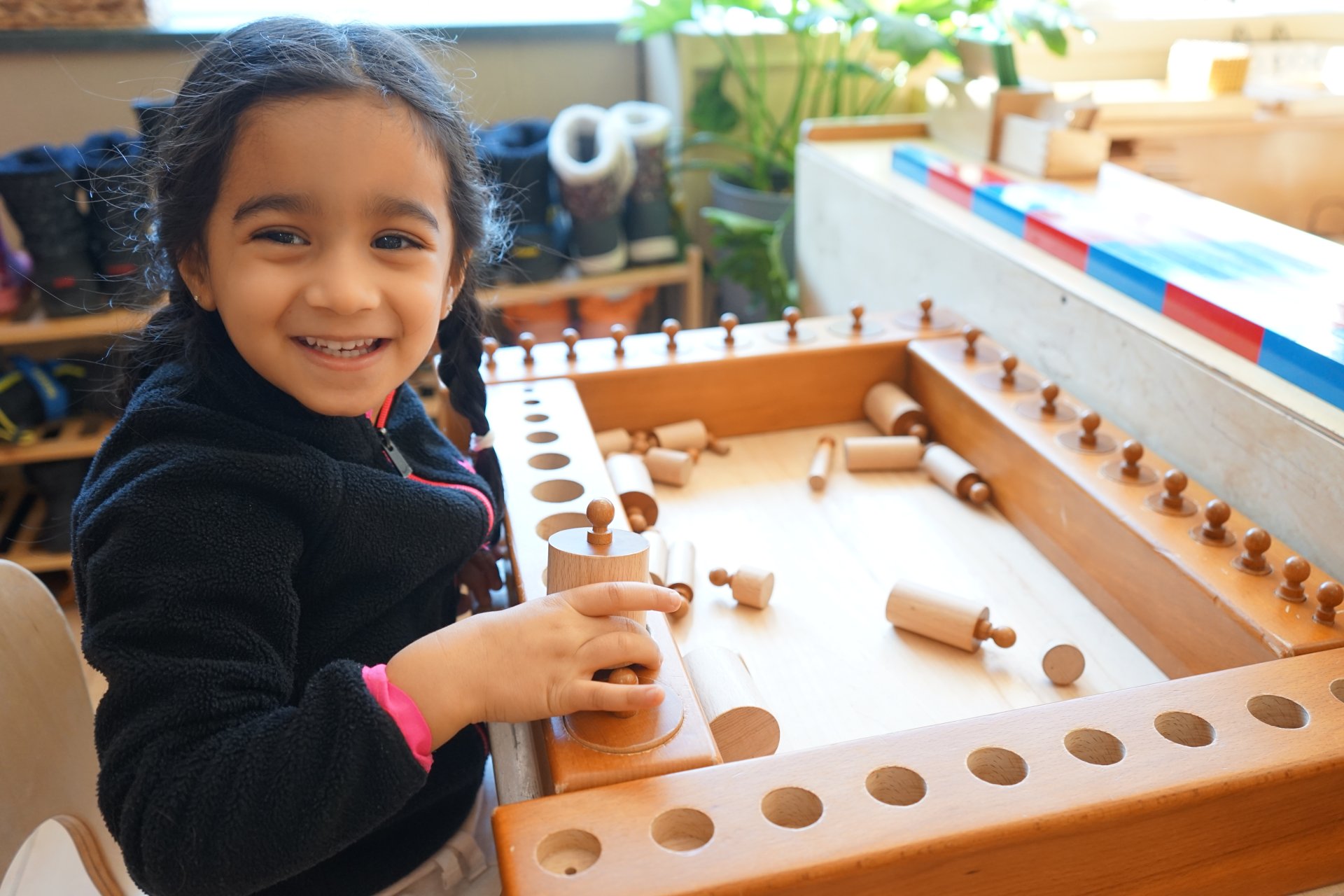
We immediately started to compare this to how our kids are learning in school, without any technology, but where there is deep development of their thinking with core understanding of concepts, practice of math and handwriting, along with use of imagination and critical thinking. Maria Montessori said, "The hands are the instruments of man's intelligence,” and we’re understanding that sentence each day more and more. Children who know how to write and use their hands to put their thoughts together once and again and again, independent of any one technology, will be able to better formulate questions, develop their own answers, critically review results and ultimately direct AI or whatever new technology comes their way.Something we have to understand about GenAI is that every answer is the most statistically probable character, word, sentence, paragraph and idea, based on patterns in its training data. Imagine we are giving the kids a tool where the output is the “most probable” rather than what they are saying with their ideas, questions, and personality embedded. We want our children to follow their natural instincts. They should explore, learn, think, express, and support their ideas. This will help them build the confidence to create the world they envision, instead of just conforming to what already exists.
We chose MSGH nearly 4 years ago from knowing nothing more than it intended to foster independence from early childhood. And we will stay longer given its steadfast commitment to our children, agnostic of the newest technological trend or advancement.
Definitely.